Step by step sourdough bread recipe for people who suck at making things like sourdough bread
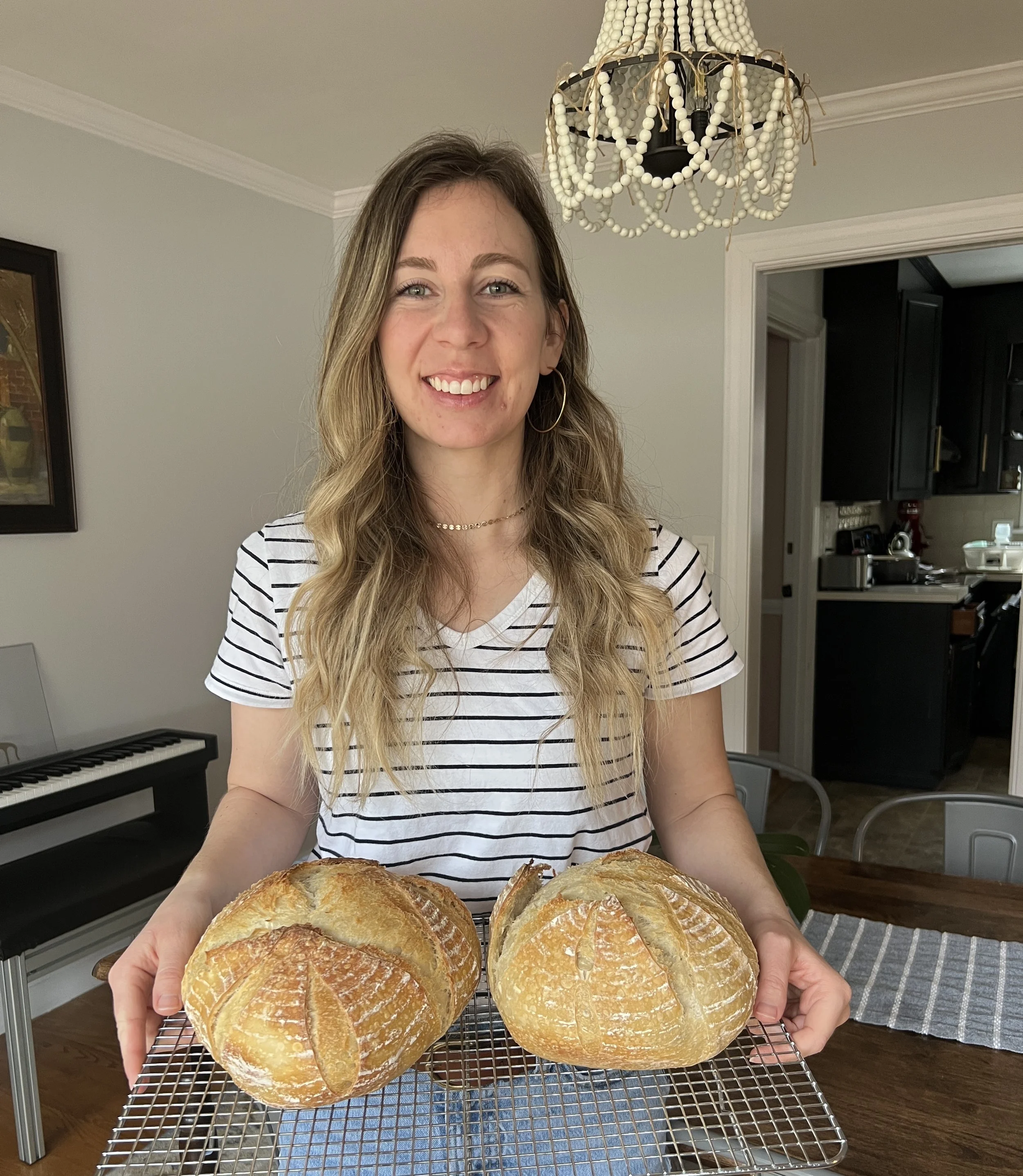
I LOVE sourdough bread and all my friends were making it and I was so jealous.
The problem was, I couldn’t keep my starter alive.
I know, I know, it’s supposed to be so easy. But there were so many differing opinions on the internet and I didn’t know which of all these opinions was right.
Two friends took me under their wing and helped me learn to make delicious bread I now I enjoy sourdough pretty much every day.
I love sourdough for the taste, texture, but most of all it doesn’t wreck my stomach or give me “bread stomach” like traditional breads typically do to me (even high quality breads).
And to give you a heads up (and I do apologize for this), there will be no “jump to recipe” option because it’s just too complex.
Sorry about that. I WILL however, walk you through STEP BY STEP each and tell you every thing you need to know to be able to bake your own sourdough bread.
Also note that I am still a padawan when it comes to baking bread. I haven’t mastered the art itself enough to deviate much from the recipe and for that reason I’m really giving you the nitty gritty of what works.
Getting started with Sourdough
The first step is to get a starter from someone.
Don’t be shy about asking, this is super easy for someone who makes sourdough regularly to give to you. It would be polite to provide your own jar.
If you can’t find a fellow sourdoughian, you can literally buy sourdough starter. I can’t repeat this enough. I’ve tried making it myself, so have my two sourdough- baking rockstar friends and it’s never worked out well for any of us.
It’s easy to make starter (it’s only flour and water after all), but the bread turns out hard as a rock. A more aged sourdough works so much better so just get one from someone or buy it.
Now if you want to just dip your toe in, build some confidence, and start enjoying sourdough immediately, try out my friend Amy’s recipe. It’s the easiest sourdough recipe you will EVER come across and it’s really good!
After having so many fails, I had given up on sourdough until Amy posted her easy peasy lemon squeezy recipe.
Once I got comfortable with the basics, I was feeling ready to try something a little fancier.
What I’m sharing with you now was taught to me by my sourdough-making fiend friend Mallory with a few tweaks of my own.
Supplies
First, you’re going to need some supplies. So get ready for that.
It did blow me away how much I needed, but I was at a point where I really wanted to go all in.
My sister has figured out ways to jimmy rig what she already has and skip on most of these things, but I am not as clever as she so I just go by the book.
Food scale - you must have this, there’s not getting around it… sorry I wish it wasn’t so. It is super useful for baking in general though so it will be a multi-purpose item!
Cast iron pad with lid - My sister gets around this by taking a large pot or normal dutch oven maybe and putting a cookie sheet on top or something like that… maybe google it if you don’t want to buy one right now.
Ceramic pie weights - these help the bottom bake nicely without getting too hard. DO NOT SUBSTITUTE with normal beans (like you could if you were using them for pie). The pan gets too hot and the beans get wrecked and seep into your bread… not talking from experience or anything. You will need enough pie weights to cover the bottom of your pan. The one I linked should be plenty, but if you get a smaller container (like Mrs. Anderson’s 135 pieces one) you will need to get two of them. I tried baking my bread without these and the bread was too hard on the bottom.
Banneton bread proofing baskets - I have only ever used the round ones so I can’t speak to the other sizes. The recipe I will share makes two loaves, so make sure you have two.
Bread lame - basically a razor with a handle to “score” the bread. You could use a simple razor blade instead (NOT a razor you use to shave your legs just to be clear… lol there’s no way you were thinking that right?).
Food thermometer - this is a MUST, every oven is different and it can be hard to tell when the bread is done. If you don’t have one of these, I would just give up immediately.
Two plastic grocery bags - traps humidity when you proof overnight and will prevent the dough from drying out.
Parchment paper
Glass jar - I’d go for bigger than a typical mason jar size
The starter
Before we do anything else, we have to get the starter thriving and jiving.
So here’s what I would do first.
Measure whatever jar or container you plan to use on your food scale to see how much it weighs (in grams).
Write that number in sharpie on the side of the jar. Then scoop your starter into it. You may need to take the starter out first temporarily and put it in another container and rinse out the jar to get this number but it’s worth it and you’ll only need to do it once.
Next, scoop the starter back into the jar and put the whole thing back on the food scale and note the weight in grams. Subtract the number from the weight of the jar (now conveniently sharpied on the side) and that will tell you how much starter you have.
From now on, you won’t have to take the starter out (except to throw some away when there is too much). You’ll have the jar’s weight written on the side so you’ll always know how much to subtract every time you weigh the starter.
1 to 1 to 1 ratio
I go by a 1-1-1 ratio, meaning you measure how much starter there is and then add that amount of flour and water.
For example, if you have 100 grams of starter in the jar, you will add 100 grams of flour and 100 grams of water and then mix it up.
After mixing, cover it with something that can breathe. Most people use plastic wrap and secure it with a rubber band.
You can always “discard” starter and will likely need to regularly so that you don’t have to keep getting a bigger jar.
And an important note - The flour must be unbleached! I usually just use Walmart’s Great Value unbleached flour for the starter (only for the starter, you will use bread flour for the sourdough itself).
The water will ideally be purified… something about not killing the bacteria with too many minerals… I usually just use filtered water from the fridge and warm it to room temperature or use Great Value purified drinking water.
If you keep your starter on the counter, you will need to feed it everyday (or at least every third day if you’re really stretching it but I wouldn’t make that a habit).
For someone like me, that’s too much work. If you keep it in the fridge, you only need to feed it ideally every 7 days (but you can usually stretch it to 10 if you must).
ALSO, sometimes it get some gross looking watery stuff on the top. You can pour that part out.
The glory of the “tare” button on the food scale
The food scale can save you from using dishes because every time you hit the “Tare” button, it will set the scale to zero.
So once you have measured your starter and know how much flour and water you need, you can leave the jar with the starter in it on the food scale, hit “tare,” bring it to zero and then measure the flour in grams as you are spooning it into the jar.
You can hit “tare” again, and do the same thing with the water. Just make sure you are using grams for everything!
You can use this trick when making the sourdough bread itself as well!
How to make Sourdough step-by-step
Do this 2 days before you expect to have your bread ready
For example, if I wanted bread on Monday, I would do this step on Saturday night.
Take sourdough starter out of the fridge at night before bed and feed it (1-1-1 ratio of flour and water and starter). Let it sit on the counter over night.
1 day before you expect to have your bread ready
In the morning, the starter will have about doubled in size. Take 250g of active starter (it will be bubbly-ish and have doubled in size) and mix with 600g of room temperature purified water until starter is dissolved.
Add 1000g of bread flour… It MUST be bread flour if you are in the United States because our normal flour doesn’t have the same amount of protein that bread flour has.
I would recommend King Arthur bread flour. Mix until shaggy dough forms. You can use your hands or a mixer with a dough hook.Cover dough and let it rest for 15 minutes. A note on covering - I usually use plastic wrap so that it’s covered but air can still get in. You don’t want it to be air tight, but also towels can be a little too porous sometimes. So I just use plastic wrap.
Add 25 grams of salt and mix with your hands. It’s kind of weird and hard to get it in evenly, don’t stress that too much. Give it a good mix and magically the dough will be way less sticky.
Cover the dough and let it rest for 1 hour
Stretch and fold the dough. Here is a youtube video to show you how.
You don’t have to get your hands wet like the video shows, and it can be really ugly looking and be just fine. My dough never folds perfectly, I’m usually kind of shaking it out or stretching it from both sides to get any kind of stretch and then folding it over.Cover the dough and let it rest for 30 minutes to an hour (I do an hour but can give you no good reason why), then stretch and fold again.
Stretch and fold 1 to 2 more times (with an hour in between each) until dough seems stronger and doesn’t spread much in the bowl.
This will give you a grand total of 3-4 stretch and fold sessions, but sourdough queen Mallory has told me that sometimes she only does it once and it’s fine. I am not that brave so I haven’t tried that myself, but I believe her.Cover the dough (again, I recommend plastic wrap) and let it rest in the bowl until it has doubled in size. When you poke it, you want it to kind of jump back at you.
This will take a WHILE. If your house is warm, it could be 5 hours, if your house runs colder, it could be more like 7-8 hours.
Also note that it is better for your dough to be over proofed (risen too much) than to be under proofed (risen too little).After the dough has risen enough (probably right before you are going to bed), pull out some parchment paper or lightly flour the counter. Snag your two banneton baskets, put the liner on them that came with it and flour them well… you don’t have to go crazy but make sure that there is a light covering of flour.
Plop the dough on the parchment paper or counter top and cut it in half. It works best with a scraper tool like this but you can use whatever. I usually just eyeball it size-wise but you could get your food scale out again if you want to be precise.
Take half the dough (that you just cut), and flatten and pop all the bubbles you can. You won’t get all of it and that’s fine, just do your best.
Shape the dough by envelope folding it until a nice little ball forms. Here’s a little tutorial for ya but to be honest mine never turns out that pretty and it’s fine. As you’re folding, pull dough towards you to build up some tension, but again, don’t stress too much.
Place the dough inside the banneton, ugly side of the dough facing up.
Put banneton with dough in it inside a plastic grocery bag. Tie the bag and put it in the fridge. This will keep the dough from drying out on top.Repeat with the other half of the dough.
Let dough sit in fridge over night. This will help give that classic “sourdough” taste and make it much easier to score the bread.
Baking and scoring the sourdough
The next morning, preheat your oven to 500 degrees.
Get your dutch oven out and fill the bottom with the ceramic beads so that the bottom is covered in an even layer of beads.
Wait to take out the dough until the oven hits 500 degrees Fahrenheit. Once it does, take out the first banneton basket.
Get some parchment paper and dump out the dough onto the middle of the parchment paper. It may take some coaxing.
Next you will score your bread.
Get out your bread lame. There are a million ways you can score it and some very artsy fartsy ideas online, but I usually keep it simple and cut across 4 times (almost as if I were slicing the top into 8 pieces. Here’s a real easy tutorial.

Put the parchment paper with the scored dough on it into the enamel dutch oven and cover it with a lid.
Baking the sourdough bread
This is where things can get dicey depending on your oven.
My friend Mallory only needs to bake her bread for 35 minutes at 500 degrees Fahrenheit and then turns the oven down to 425 degrees, takes off the lid, and bakes for 8 minutes. So I would use that as a guideline.
My oven is old however, and it takes me about 45 minutes to bake it with the lid on at 500 degrees Fahrenheit and then I turn the oven down to 425 and usually bake it for 3-4 more minutes with the lid off.
Here’s the rule of thumb, the bread is done when it’s between 205-210 degrees Fahrenheit.
So usually I look for the bread to be around 185-190ish degrees fahrenheit before I turn the oven down to 425 and take the lid off.
Then once it hits between 205-210 I take it out. I like to have mine be closer to 205 so it will toast well without drying out. My friend Mal intentionally undercooks her bread a bit so that it’s perfect when toasted, so keep that in mind too!
Once the first loaf is done, take it out and put it on a cooling rack. You do NOT want to cut into the bread until it cools. The bread finishes its rising process while it cools.
Now, turn the oven back up to 500 degrees and score and bake the second loaf. This will likely need less time to bake since the dutch oven will already be hot so I would take a few minutes off of your baking time or check it early.
Freezing sourdough bread
It usually takes my family a couple days to finish off one loaf of bread, so I freeze the second loaf in a gallon sized plastic freezer bag once it’s COMPLETELY cooled.
When I’m ready to dig into that frozen loaf, I take the bread out of the freezer, open the bag and let it thaw on the counter. It tastes as fresh as ever.
Extra credit
If you find you like baking sourdough and having it at the ready, you may want to buy a hand-crank bread slicer. This is the one I have and it is a GAME CHANGER.
It was literally dreading having to cut the bread with a regular bread knife because everytime I did, my masterpiece looked like it had been massacred because home girl can not cut evenly.
It’s also so much easier to cut into that delicious crusty crust. These are pricey however, so I would only buy one if you know you will be making bread regularly.
You can also get an extra wide toaster. I don’t have one yet but it’s on my wish list! That way you can evenly toast those big ol slices of bread.
In sum
Whew, I know that was a lot! Making sourdough bread is actually pretty simple, but I was so lost the first 4 times I tried to start.
I hope this gives you everything you need to bake and enjoy your own sourdough! Happy baking! Let me know how it goes and reach out with any questions!
*Glittering Reads with Ash is an amazon affiliate and any purchase you make through these links will give them a very small kickback with no cost to you.